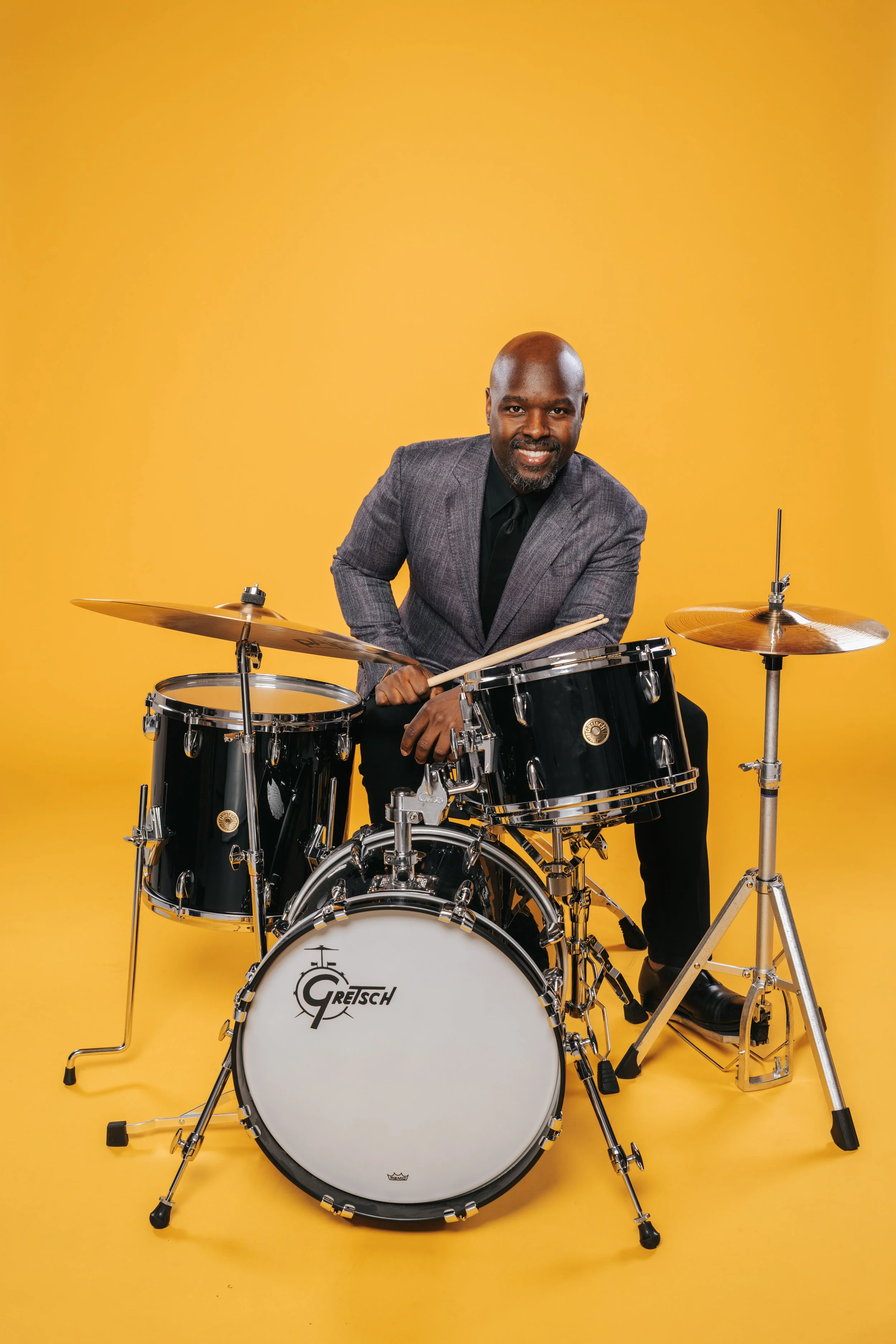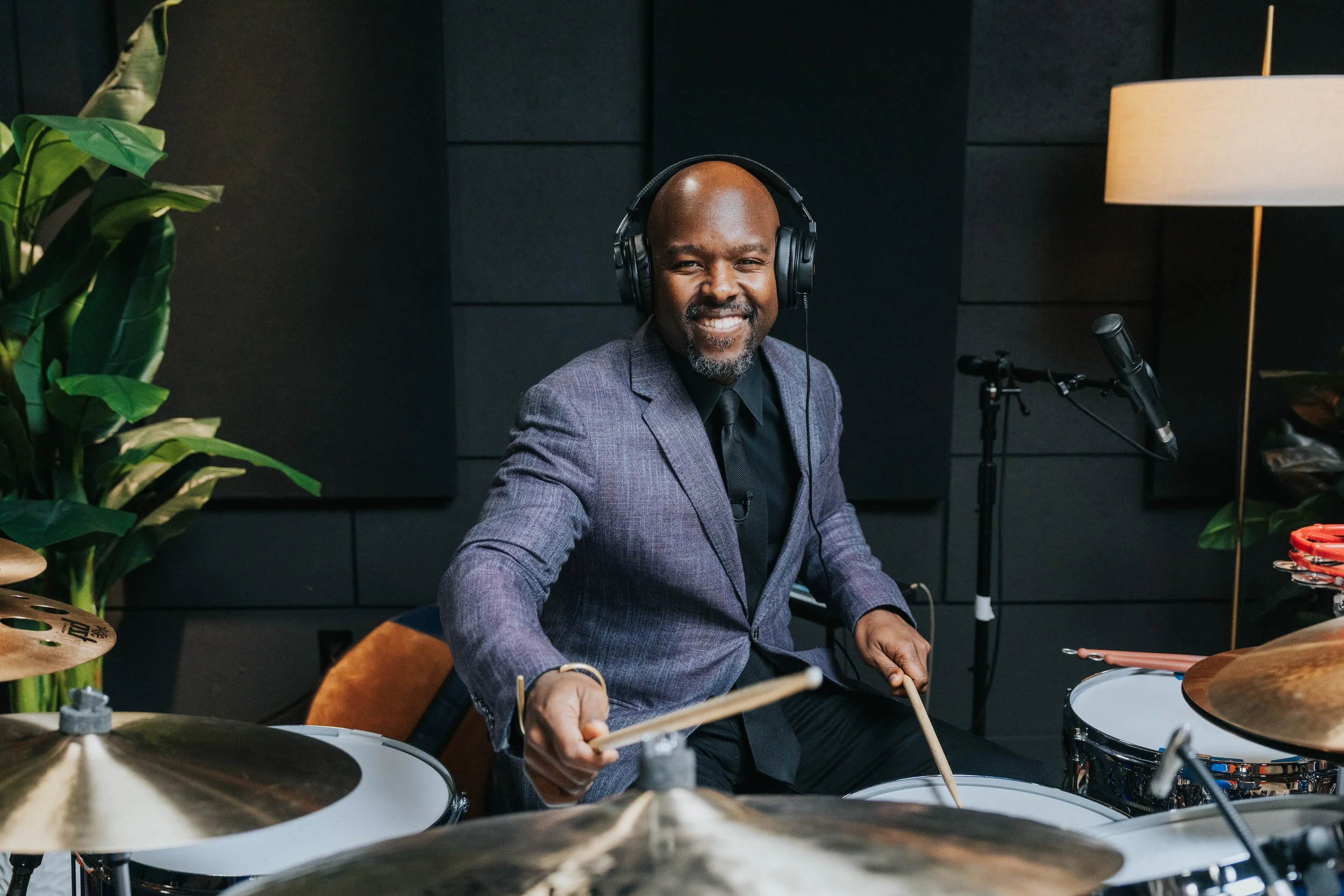
Ulysses Owens Jr. is a three-time GRAMMY Award-winning jazz drummer, bandleader, producer, educator, author and composer. He leads Generation Y and The People’s Big Band, heads UOJ Productions, teaches at The Juilliard School and The New School, and serves as Drumeo’s inaugural Jazz Drum Instructor and Founding Artistic Director of Jacksonville nonprofit Don’t Miss a Beat. Through UOJ Productions, he has produced more than 70 albums in 15-plus years.
The New York Times has called Owens “a drummer who takes a back seat to no one.” He has performed or recorded with Christian McBride, Kurt Elling, Wynton Marsalis, Mulgrew Miller, Renée Fleming and Dianne Schuur, and has appeared on GRAMMY-winning albums by Elling, the Christian McBride Big Band and the Generation Gap Jazz Orchestra. His big band earned DownBeat’s Rising Star Large Ensemble honor in 2022; Modern Drummer readers named him Jazz Drummer of the Year in 2024; and Generation Y’s A New Beat spent eight consecutive weeks at No. 1 on the JazzWeek Radio Chart.
“I want to be known as a trailblazer, and as a person who has his hand on the pulse of what’s next in every way,” Owens says. “I want to be known as a guy that echoes the past, but I’m firmly planted in the present, and I’ve also got my hand very much on the future of whatever is going to be next. I’ll be smack dab in the middle of it, even if I’m 80 years old.” He found an early model in Quincy Jones, whose autobiography he read at 18. “This guy was at the precipice of every era, and I want to be that.”
Owens was born December 6, 1982, in Orange Park, Florida, near Jacksonville. His mother directed choirs and sang in church; his father devoured everything from the Crusaders to Otis Redding and took Owens to the Jacksonville Jazz Festival. His cousin Kevin supplied jazz records and drummer videos. Owens grew up in the Church of God and started playing drums in church. His father built him a small cowbell setup so he could sit beside the drummer; as a young child, when that drummer left over a pay dispute, Owens became the drummer for the children’s choir and two adult choirs.
His parents enrolled him in classical piano lessons so he would learn to read music. In middle school, Owens tried to switch to saxophone and could barely make a sound. His band teacher, Miss Henley, handed him drumsticks and watched him play a funk groove and solo. “I want you to take that saxophone home and don’t you ever return with it again,” she told him. “You’re going to be my drummer.” Over the next three years, Henley taught him concert snare drum, mallet percussion and marching percussion. At Douglas Anderson School of the Arts, Owens joined the concert band and percussion ensemble and became the freshman drummer in its top jazz ensemble.
At 16, Owens visited New York and met drummer John Riley at Manhattan School of Music. Riley heard him play and told him, “If you want to play jazz, you don’t sound like a jazz drummer. You sound like a church drummer.” He sent Owens home with Miles Davis’ Milestones. On the record, Philly Joe Jones’ rudimental snare language sounded immediately familiar. “It was like hearing something, like I had been here before,” Owens says. He threw out his R&B and hip-hop records and decided, “I’m gonna learn this music, and I’m gonna dedicate my entire life to it.” He studied Art Blakey, Max Roach and Billy Higgins, then worked backward to Baby Dodds and Sid Catlett. Owens describes himself as “a traditionalist that’s rooted in the foundation and the evolution of the instrument and the art form of jazz drumming.”
The Juilliard Experience brought Owens back to New York. He liked the school’s intensity but did not want to study classical percussion; the following year, Juilliard announced its new Jazz Studies program, and Owens entered its inaugural class in 2001 at 18. He was one of only four 18-year-olds in a class filled largely with older players. “Life began at Juilliard,” he says. “I got baptized by fire. I realized that I didn’t know anything.” Victor Goines, the program’s first artistic director, became a key mentor. At Juilliard, Owens realized “it wasn’t enough to be a drummer. I needed to be a complete musician.”
Pianist Mulgrew Miller soon became his other central mentor. Miller approached Owens at a gig, corrected the way he was playing his ride cymbal and kept mentoring him as Owens came back with questions. Their relationship lasted until Miller’s death in 2013; Owens has called him a “second father,” and they spoke every week. Miller started hiring him while he was still at Juilliard, and as professional calls increased, Owens briefly considered leaving school. Drummer Marcus Baylor stopped him: “Get your degree. The road will always be there.” Owens stayed and earned his Bachelor of Music degree in Jazz Studies in 2006.
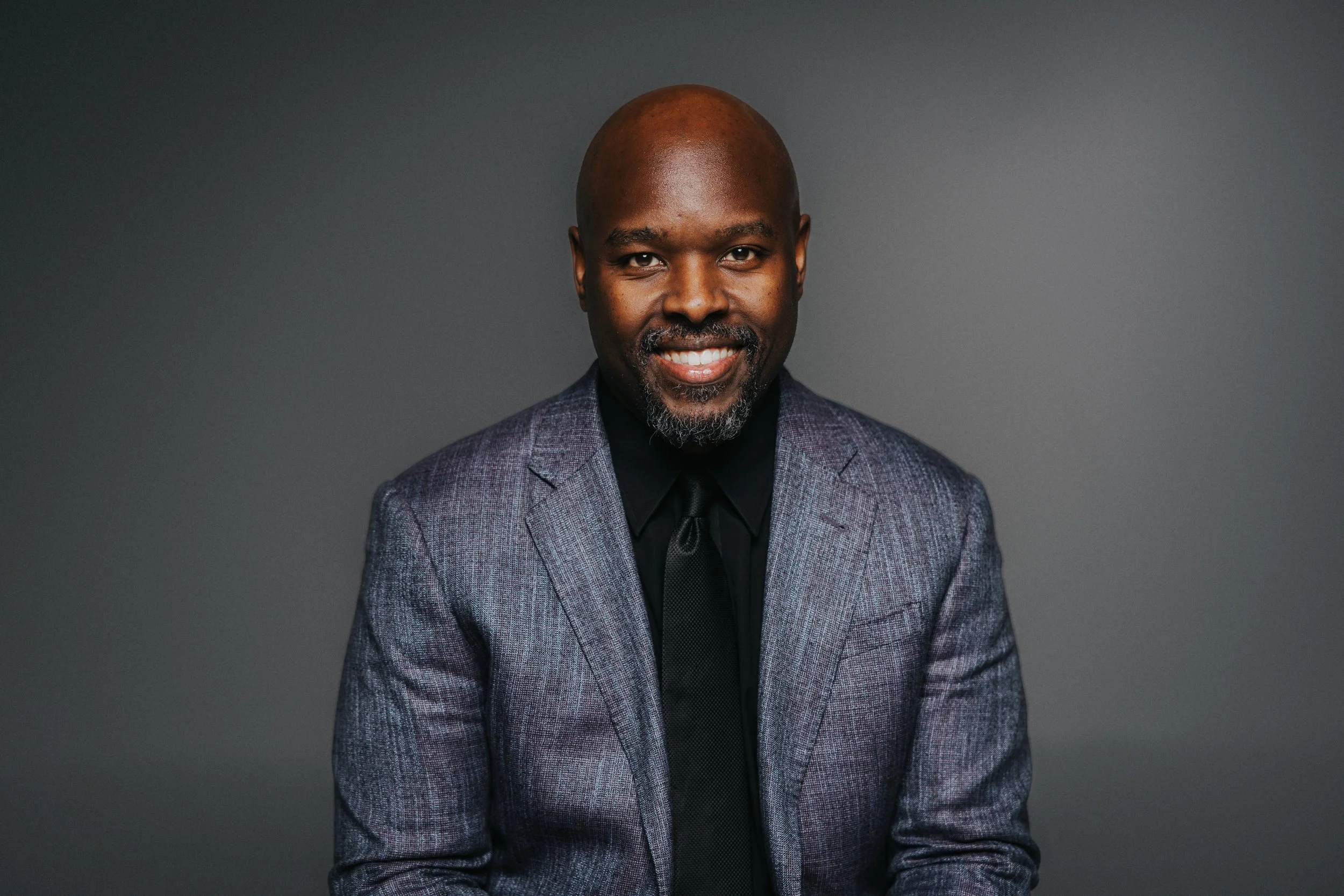
In 2008, Owens and his family founded Don’t Miss a Beat in Jacksonville, initially responding to young people struggling in school; it grew into a performing-arts and academic-support organization centered on musical theater, education and civic engagement. He released his first album as a leader, It’s Time for U, in 2009. By then, professional work was accelerating too: playing with Eric Reed helped lead Owens to a major touring and recording job with Kurt Elling.
Owens played on Dedicated to You: Kurt Elling Sings the Music of Coltrane and Hartman, winner of the 2010 GRAMMY for Best Jazz Vocal Album, then joined Christian McBride and pianist Christian Sands in McBride’s trio and appeared on the Christian McBride Big Band’s GRAMMY-winning The Good Feeling. Owens spent seven years playing with McBride before telling him that the experience had inspired him to concentrate on his own band. McBride replied, “I knew that it was just a matter of time.”
His own catalog kept expanding. Unanimous followed in 2012, Onward & Upward in 2014 and Falling Forward in 2017, while Owens co-led the New Century Jazz Quintet through four albums. He still cites Unanimous, recorded with McBride, Sands, Nicholas Payton and others, as a record that “cemented some things” for him as a leader.
During that stretch, Owens began producing other artists. “I want to be everybody’s first producer,” he says. “I like untapped talent. I like finding people that nobody knows because that way, you could be part of not just making music but also introducing someone to the world.” He worked with April Varner and Benny Benack III early in their development. Owens initially built records by choosing repertoire, musicians, studios and engineers; working with producer Kamau Kenyatta taught him to listen more deeply inside a performance and make arranging decisions that could “shift the record.” He still likens producing to casting: know whom to put in the room, then know when to “make room for God to walk in the room.”
In 2016, Owens returned to Juilliard as a faculty member and later joined The New School. Drumeo brought him aboard as its inaugural Jazz Drum Instructor, extending his teaching to more than 10,000 students worldwide. “You’ve got to be able to play your ass off,” Owens says of the modern musician. He expects students to understand business, marketing and self-management as well as their instruments. “You’ve got to know how to play, promote, market, and continue to reinvent yourself.”
After pursuing several major university positions, Owens came to see that his path might require building some of the opportunities he hoped to find. “I have to create the positions that have not yet been presented to me,” he says. “I’ve kind of had no other choice.” He has since worked with dozens of universities while developing educational programs of his own. “You can either get mad at the dance floor,” he says, “or you can create your party and invite everyone else to it. And that’s what I figured out how to do by creating my own things.”
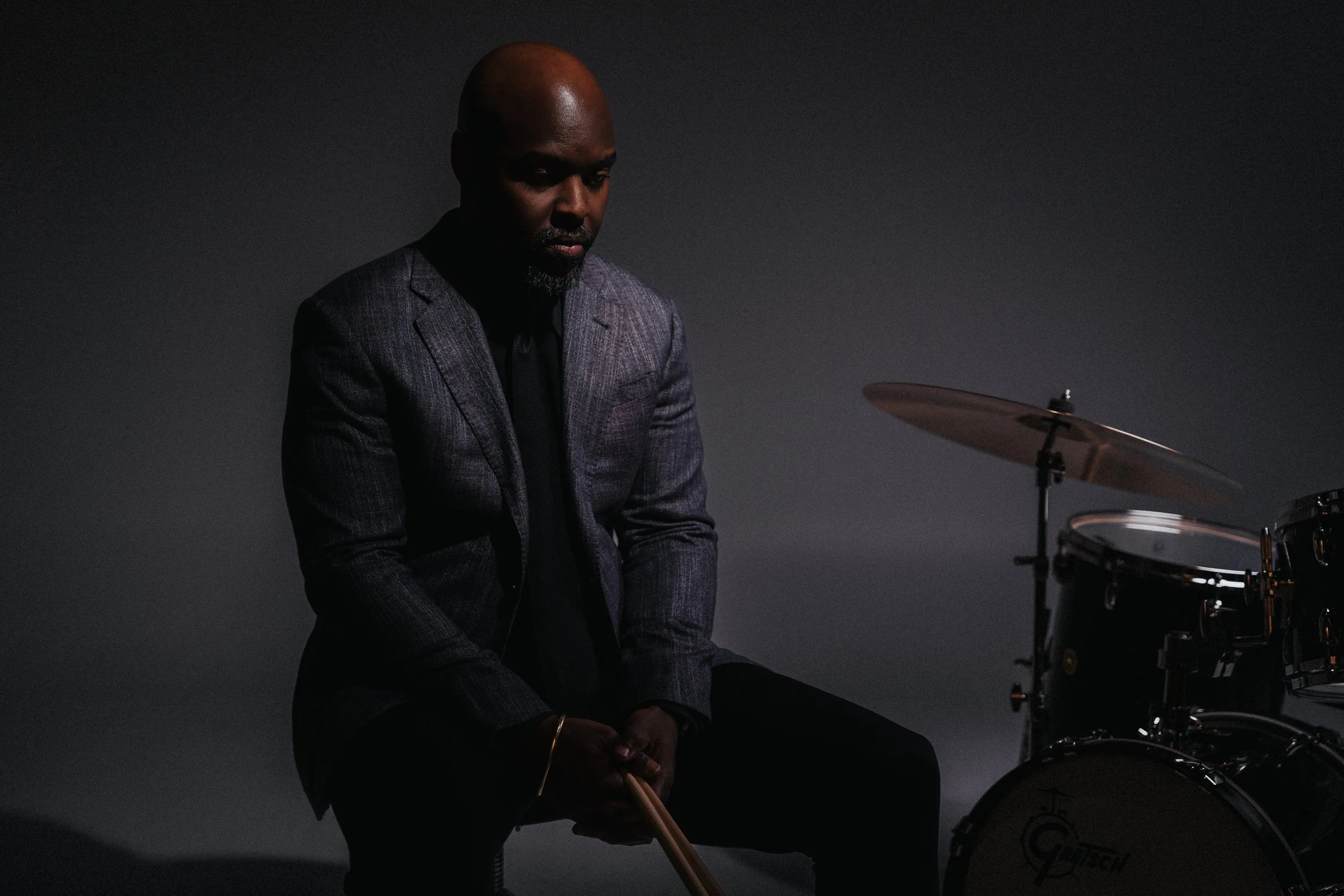
In 2019, Owens released Songs of Freedom, drawing on music associated with Nina Simone, Abbey Lincoln and Joni Mitchell, and conceived Generation Y as a working band for younger musicians. He published Jazz Brushes for the Modern Drummer in 2020. In 2021, Soul Conversations marked the recording debut of his big band, while The Musician’s Career Guide: Turning Your Talent into Sustained Success extended his teaching to the page; the big band earned DownBeat’s Rising Star Large Ensemble honor the following year. Asked about comparisons between his mentorship and Art Blakey’s, Owens points to what came before him: “I would not have become what I am today if not for those who helped me. I’m just repeating a model.”
Writing remains another part of that work. His writing has appeared twice in The New York Times, and in 2024 he published Jazz Big Band for the Modern Drummer and 30 Day Jazz alongside his Drumeo course. “I feel more comfortable writing than speaking,” Owens says. “I think writing is very important to me, particularly for jazz musicians. I think not enough of us write about our own history.” He wants eventually to write books about musicians who shaped that history.
In November 2023, another path opened when Drumeo handed Owens Nirvana’s “In Bloom” without its original drum track and asked him to play the song cold. He had never heard it. The resulting video drew millions of views. Generation Y made its album debut with A New Beat in 2024; produced by Jeremy Pelt and recorded at Rudy Van Gelder Studio, it drew on repertoire connected to Mulgrew Miller, Roy Hargrove and Art Blakey and spent eight consecutive weeks atop the JazzWeek chart. Owens calls Generation Y his “Taj Mahal”: “That has brought together everything that I am: mentor, bandleader, educator, entrepreneur, writer, everything.”
Drumeo later brought Generation Y into the same experiment with Nirvana’s “Heart-Shaped Box,” producing another video that drew millions of views. Branford Marsalis and producer David Lai also brought Owens into A Wonderful World: The Louis Armstrong Musical, giving him his Broadway debut behind the drums when the production opened at Studio 54 in 2024. Owens released the solo-drum EP Play the Drums, Vol. 1 in 2025, then returned to Generation Y with Around the World With U on March 27, 2026. He produced the album, recorded at Trading 8s in Paramus, New Jersey, and it spent two consecutive weeks at No. 1 on the JazzWeek chart.
Building on those Drumeo experiments, Owens and Generation Y entered Musora Studios in Vancouver in April 2026. Over three days they recorded Kind of Grunge, tackling music associated with Nirvana, Pearl Jam, Alice in Chains, Soundgarden and others. Owens and Ron Jackson produced the album, which Cellar Music released August 14. For Owens, the distinction among Generation Y’s first three records is simple: “A New Beat and Around the World With Uintroduced us to the world of jazz and cemented that we’re a really viable concept that sounds good. Kind of Grungeintroduced us to the world.”
In July 2026, Benjamin Shorstein’s Concerto for Drums and Orchestra, written specifically for Owens, appeared on The Drum & The Dream. In August, Owens launched a global drum intensive in Shanghai and Beijing; in September, he served as Music Supervisor and Composer for François Battiste’s production of August Wilson’s The Piano Lesson at Two River Theater. Owens also leads Afrobeat to Afrobeats with bassist Michael Olatuja, while another Generation Y project inspired by Haruki Murakami is planned for 2027.
“I bring the world together,” Owens says. “I teach your child, and then I help your child go to a great school, and then when they get to that great college, I teach them, and then I put them in my band, and then I take them around the world, and then I make a record with them, and then I take that record, or I take my music and combine it with your favorite music that you grew up with, like grunge or Afrobeat or whatever. … And then I find other artists that are in the middle of becoming, and I help them to become with more impact and more excellence. So I think that what I am or what I represent is an artist that is, in many ways, the full spectrum, an artist in totality.”